Focus on Your Sails – Enhancing Strengths
Overview
- This unit’s mindfulness moment prompts you to use a simple mantra of “wise mind” as you breathe in and out.
- This unit formally introduces the wise mind framework, a tool you can use to think through problems and enhance your strengths.
- The unit also introduces PLEASE, an acronym that can help you consider different wellness practices to optimize your strengths to keep your mind and body ready to face any storm.
Unit 2 focuses on your strengths.
Bridge Exercises
Why This Matters: Establishing a strong sleep routine is an essential part of PLEASE and is often a task that’s difficult for young people. This bridge exercise asks you to keep a sleep log, an excellent way to gather information about your sleep and how to improve it.
Good sleep is a cornerstone of keeping your mind and body in top shape. Getting good sleep depends on keeping proper sleep hygiene. What we do, what we eat, and many other factors can affect sleep. A sleep log, a record of information surrounding your sleep, may help you identify factors that positively and negatively affect your sleep. 
There are many kinds of sleep diaries that can help you capture a variety of information. Consider these examples from the National Heart, Lung, and Blood Institute; the National Sleep Foundation; and The Sleep Charity.
For this bridge exercise, you’ll keep a sleep log for seven days. Answer the “Before” questions in the powerpoint BEFORE completing the Sleep Log. Use the sleep log to track information about your sleep for seven days. After you’ve completed the log, complete the “After” questions.
Why This Matters: You likely have a trusted adult in your life who has found their own approach for accomplishing PLEASE tasks. This activity prompts you to ask that person (or a peer) about their approach and the lessons they’ve learned. This will provide you with another perspective on how to accomplish these tasks.
The components of PLEASE are common-sense behaviors, but they can be challenging to perform. During transitions, we can easily lose track of our positive routines if we’re not being intentional about sticking with them. Now is an opportunity to consider your routines related to the PLEASE skill and to shore up areas you think could be improved. To create routines that work for you, you may find it useful to get input from people you trust.
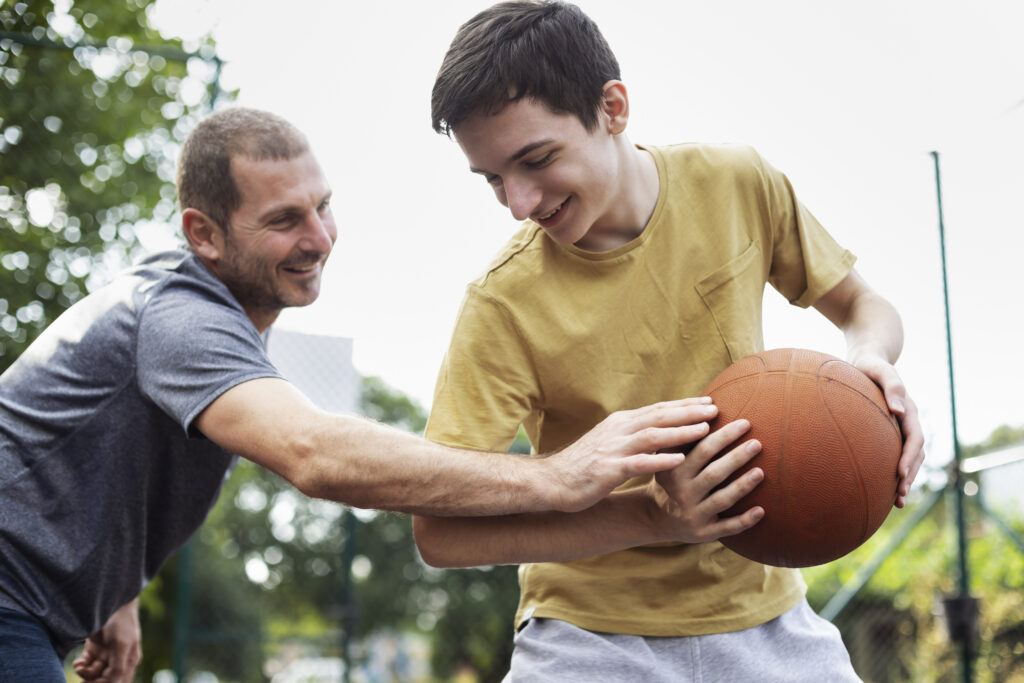
Ask a family member or peer to chat with you about their advice for completing the components of PLEASE. Ask the questions below and record the responses in your student guide. Then answer the reflection questions.
- Which PLEASE activity (physical health, eating balanced meals, avoiding mood-altering substances and situations, sleep routine, and exercise) have you changed or improved at some point in your life? What prompted the change?
- What helped you make this change?
- What lessons did you learn that could help me keep up with my PLEASE tasks as I transition to college or make other transitions in my life?
Session 2 Survey
Answer the following questions about your experience with Session 2.
This survey has been completed